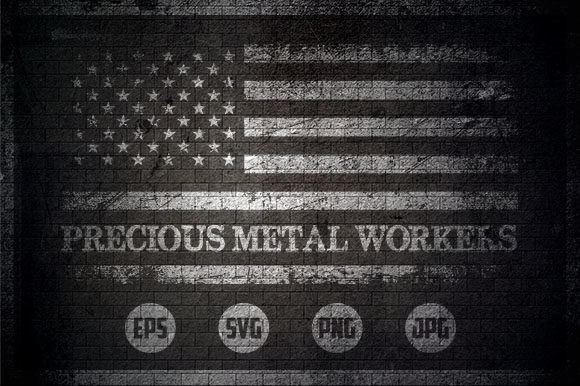
Precious Metal Workers - USA Flag
A Designer’s First Look: Bold, Patriotic—and Built for Real Stitching
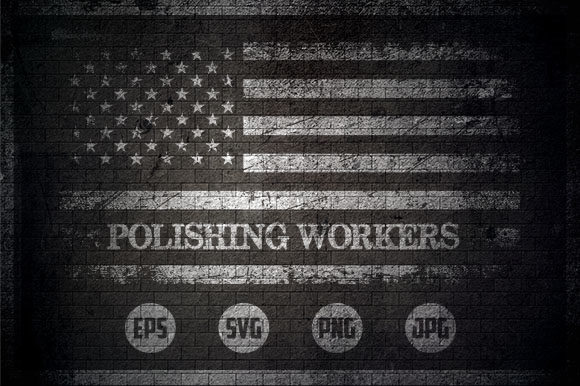
When I opened Precious Metal Workers - USA Flag in my design software, the first thing that struck me wasn’t just the red, white, and blue—it was the weight of intention behind it. This isn’t a flat vector slapped onto a canvas; it’s a design with presence. The “Precious Metal Workers” lettering has a subtle metallic sheen implied through contrast and clean line work—not over-rendered, not cartoonish—just confident, grounded, and quietly proud. The USA flag element is integrated, not tacked on: stars aligned with precision, stripes balanced for rhythm, and enough negative space to breathe under thread. It feels like a badge you’d stitch onto a workshop apron or a custom tote for a local metalworking co-op—not flashy, but deeply authentic.
Where It Shines: Real Projects That Feel Handmade, Not Stock
I tested Precious Metal Workers - USA Flag as the centerpiece for a limited-run embroidered tote bag—cotton canvas, medium-weight, meant for a small-town craft fair booth. It stitched cleanly at 4.5" wide using standard stabilizer and 40-weight rayon thread. The lettering held crisp edges without excessive satin stitch buildup, and the flag’s stripes translated well into smooth fill stitch zones—no skipped stitches, no puckering. That tells me it’s engineered for reliability, not just aesthetics.
It also worked beautifully on a heavyweight cotton sweatshirt (unisex crewneck), placed left-chest. The design scaled down to 3.25" without losing legibility—the star field stayed distinct, and the “Precious Metal Workers” text retained its sturdy character. For baby embroidery? I’d use it on a soft cotton onesie—but only as a single-color version (navy or charcoal thread on ivory fabric), skipping fine details like tiny star outlines. On tea towels or pillow covers? Yes—especially when paired with simple running-stitch borders or minimalist applique accents. It reads clearly at arm’s length, which matters for boutique shelf appeal.
Where to Pause: Fabric, Fit, and Functional Realities
This isn’t a one-size-fits-all embroidery file. On stretchy fabrics like jersey tees or lightweight knits, I recommend testing with light cutaway stabilizer and reducing stitch density slightly—especially in the horizontal stripe areas where dense fill can cause distortion. On dark fabrics, avoid light-colored thread unless you’re using high-contrast underlay; the design’s clean lines rely on clarity, not opacity.
For caps or curved surfaces, keep the size under 2.75". The top curve of the “P” and the outer edge of the star field need breathing room—if hooped too tightly, those corners can distort. And while the SVG and EPS files are perfect for digitizing adjustments, remember: this is a graphics file—not a pre-digitized machine embroidery design. If you’re not comfortable converting vectors to stitch files, factor in time (or cost) for professional digitizing before stitching.
Also worth noting: the design includes fine interior linework (like subtle shading in the lettering). On textured fabrics—burlap, heavy linen, or looped terrycloth—those details may blur or vanish. Save those flourishes for smooth cotton, twill, or felt-backed patches.
What It Adds to Your Finished Product—Beyond the Thread
Precious Metal Workers - USA Flag elevates perceived value because it avoids cliché. It doesn’t shout “USA!”—it nods with respect. Customers notice that. When I showed the embroidered tote to a handful of makers at our local studio, three asked where I got the design—not for licensing, but because they wanted to use it *themselves*. That’s brand consistency in action: it fits seamlessly into a craft business identity rooted in skill, heritage, and authenticity.
As a personalized gift? Strong yes—especially for welders, jewelers, machinists, or veterans who work with metal. It reads as thoughtful, not generic. As an Etsy listing or small shop product? It stands out in search results when paired with smart tags (“metalworker gift,” “USA craft pride,” “embroidered workshop tote”)—but only if your photos show real stitching, not just digital mockups.
Practical Notes Every Embroidery Designer Should Check
- Test first—on scrap fabric matching your final project’s weight and stretch.
- Review stitch density in your digitizing software—adjust underlay and pull compensation if needed for your machine and fabric combo.
- Confirm hoop size before finalizing placement—this design works best in 4"x4" or larger hoops for full detail.
- Inspect small corners—especially the points of stars and serifs in the lettering—ensure they’ll translate cleanly at your chosen size.
- Try black-and-white mockups to gauge contrast and readability across fabric colors.
- Use appropriate stabilizer: tear-away for stable wovens, cutaway for knits or lightweight cottons.
- Verify licensing before selling finished items or reselling the digital file—this is a Crafts-category graphic, not automatically commercial-use cleared.
Final Thought: A Design That Earns Its Place
Precious Metal Workers - USA Flag isn’t background noise. It’s a quiet statement—one that works hardest when it’s part of something real: a handmade apron worn daily, a gift given with intention, a small shop’s signature item that customers recognize across markets and seasons. It respects the craft behind the stitch and the person wearing the finished piece. If you’re choosing embroidery designs for client work, your own shop, or personal projects that matter, this one earns its spot—not because it’s trendy, but because it’s built to last, both in thread and in trust.